












Milesight EG71: A technical dive into the new interface for IoT / BMS integrators
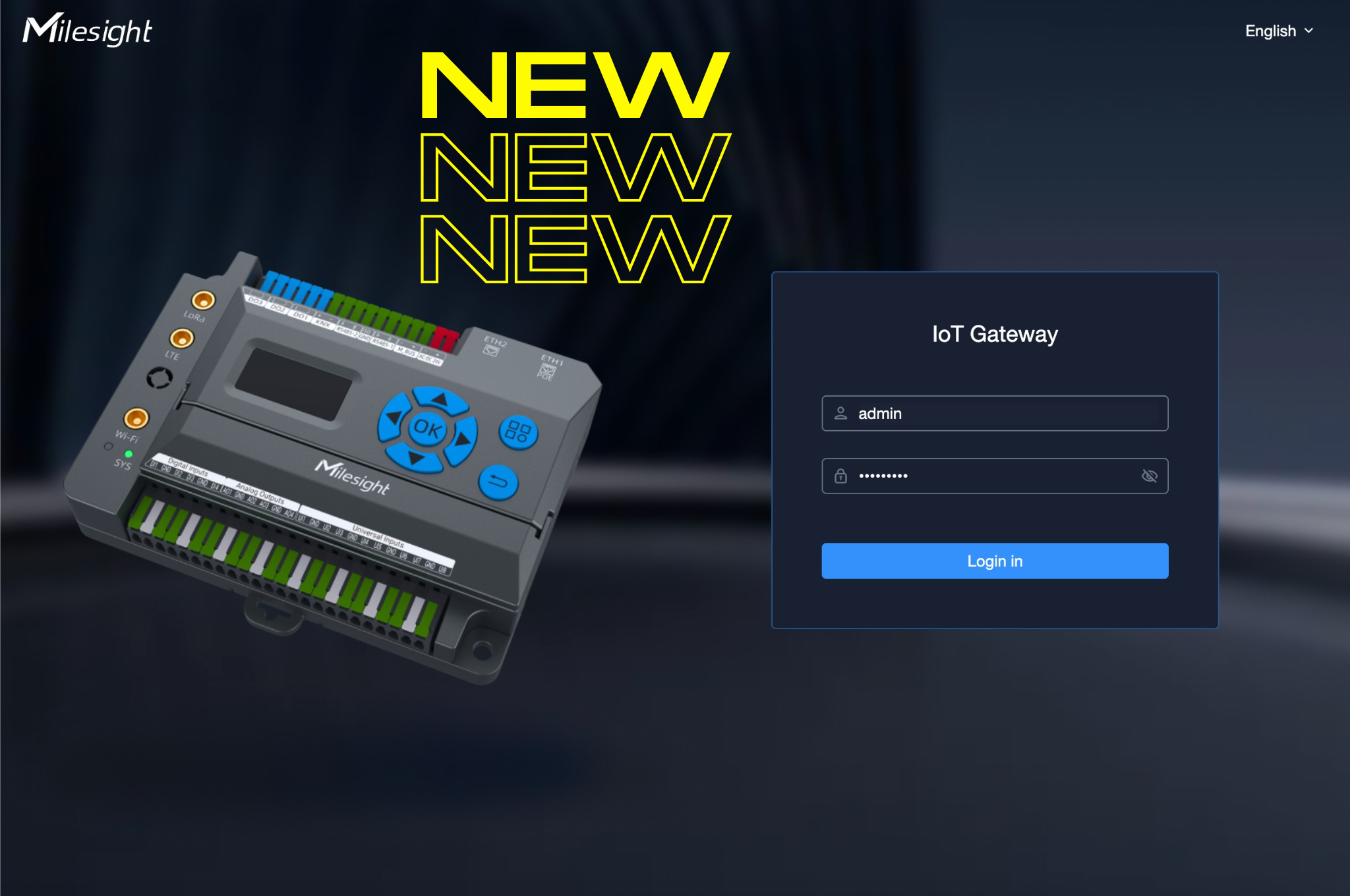
The new Milesight EG71 gateway marks a true evolution in the world of IoT edge gateways for Smart Buildings. With a redesigned interface and clearer software architecture, Milesight facilitates on-site integration, multi-protocol sensor management, and data routing to BMS or the cloud. It significantly improves the structuring of functions around the real project cycle: acquire data, decode it, route it, then utilize it. In this article, we'll take a practical look at the visible new features in the interface and how they impact integrators.
A more readable interface right from the Status page
The Status page is richer and more usable. As soon as you connect to the gateway, you quickly get the essential information to check the overall status:
-
system status,
-
network status,
-
connectivity,
-
gateway information,
-
operational overview.
This is ideal for commissioning or quick diagnostics. On a construction site or an existing BMS, being able to validate the gateway's status provides significant time and efficiency gains.

Data Services: a true separation of roles
The Data Services section has been redesigned and represents a significant improvement in technical UX. It is now divided into 4 distinct blocks:
-
Data Acquisition,
-
Data Forwarding,
-
Device Repository,
-
Data Flow.
This separation is very relevant for an integrator because it adapts to business logic:
-
Data Acquisition = equipment declaration and collection,
-
Device Repository = management of models / codecs,
-
Data Forwarding = publication to target systems,
-
Data Flow = orchestration / flow logic.
We now have a more modular approach. This makes it easier to maintain, especially when the project grows (multi-protocol, multi-zone, multiple gateways, etc.).
Data Acquisition, the central building block for declaring equipment
The Data Acquisition section becomes the true heart of on-site integration.
This is where we will:
-
declare sensors / equipment,
-
choose protocols,
-
define the Device Access Network,
-
select a predefined or custom model,
-
map the reported objects,
-
manage the fleet,
-
prepare firmware updates (FUOTA).

The EG71 also allows for a BACnet scan to automatically detect available points. This saves valuable time when working in a building/BMS environment with existing BACnet equipment.
And of course, manual addition remains an option. This is important because sometimes certain equipment doesn't respond well, or manual intervention is required.
The interface also clearly shows:
-
the available protocols when adding a device,
-
and the Device Access Network used to access the equipment.
This is a real advantage for avoiding configuration errors. In hybrid architectures (subnets, multi-brand equipment), clearly distinguishing between the logical protocol and the access network greatly simplifies understanding.
Predefined models, custom models, and object management
One of the most useful features for an integrator is the management of device models:
-
predefined models (especially for the Milesight ecosystem),
-
custom models,
-
objects associated with the sensor.
For Milesight sensors, objects are automatically suggested, which significantly speeds up commissioning. For third-party equipment, the behavior depends on the specified codec.

Writing instructions to the sensor
Another point to note: a function for writing instructions to send to the sensor.
This means we are not just looking at a "one-way" data collection gateway. We can also interact with the equipment (depending on the protocol/device), which opens up concrete uses such as parameter setting, control, or testing.
For BMS/IoT integration, this bidirectional capability is very useful, especially during the acceptance testing phase.

IO Devices, Device Access Network, and multi-site deployment
The EG71 was not designed solely for single-site installations. There is a clear focus on structured deployments:
-
multiple devices,
-
multiple network segments,
- remote maintenance,
-
firmware evolutions over time.

FUOTA and fleet management
The presence of Firmware Upgrade Over The Air (FUOTA) is a real asset for integrators. As soon as a large number of sensors are deployed, maintenance becomes as important as initial commissioning.
Having fleet and update functions integrated into the Data Acquisition logic allows for:
-
standardizing operations,
-
limiting on-site interventions,
- maintaining version consistency across the fleet.

Data Forwarding: clean output to BMS, local server, or IoT platform
The Data Forwarding section defines where the data collected by the gateway goes.
The gateway allows sending via:
-
BACnet Server
-
Modbus Server
-
HTTP forwarding (e.g., ChirpStack platform)
-
MQTT (e.g., Mosquitto broker)
This is exactly what is expected from an edge gateway in a real project: the ability to bridge multiple worlds. This centralizes data collection and publishing logic in one place, making the gateway an interoperability component.

Device Repository: the real lever for multi-brand openness
The Device Repository section is probably the most interesting for integrators who don't work in a 100% Milesight environment.
It includes:
-
pre-integrated Milesight codecs,
-
the ability to update them,
-
the addition of custom codecs,
-
bulk import/export functions.
This is what makes the EG71 a truly usable gateway for heterogeneous projects.

In practice:
-
if you are fully Milesight, setup is quick,
-
if you integrate third-party equipment, you can add codecs,
-
if you deploy at scale, bulk import/export saves a lot of time.
This allows an integration team to industrialize deployments.
Packets Page: a true debugging tool
When a project gets stuck, the ability to see exactly what is being reported and how it is interpreted can save hours.
The Packets Page allows for:
-
integration validation,
-
codec debugging,
-
frame analysis,
- sensor reporting diagnostics,
- quality control before production.

Cellular connectivity: SIM recognized directly
Our Transatel SIM is recognized immediately upon insertion, in plug-and-play mode.
This kind of detail has a big real-world impact:
-
faster commissioning,
-
less manual configuration,
-
less friction for technical teams.

For multi-site deployments or short interventions, this type of behavior makes a real difference.
The new EG71 is a more "project-oriented" gateway, ideal for BMS/IoT integrators. It follows the logic of the field and separates responsibilities.
The redesign of Data Services makes the gateway clearer, more modular, and better suited for real integration projects, especially in Smart Building, BMS/BAS, and multi-protocol environments. The new platform is more robust for industrializing deployments and simplifying operations, which is exactly what is expected from an edge gateway.

Voici un titre
Voici un titre