
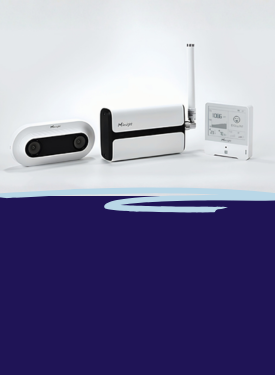














Why monitor air quality in your environment?
Autumn is here, with its wet and windy weather. Windows remain closed, so indoor air is less frequently renewed. Do you feel tired at the end of the day, experience a drop in energy, or migraines? What if this was linked to excessive levels of CO2, fine particles, or volatile organic compounds in your workspace?
Using a CO2 sensor is a simple and effective way to monitor indoor air quality. This will have an immediate impact on the well-being of users in shared spaces.
What is an air quality sensor used for?
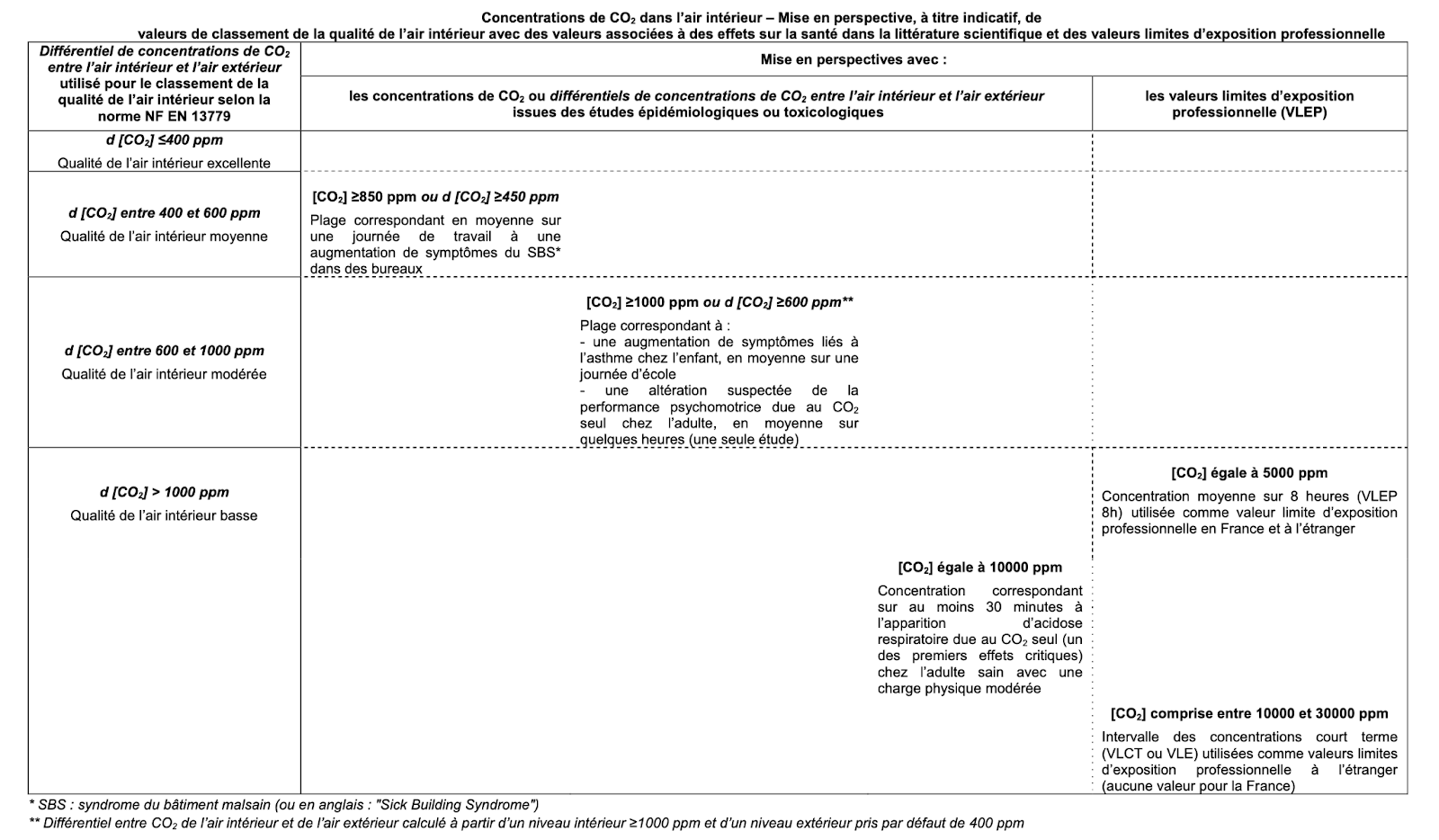
Carbon dioxide, also known as CO2, is a colorless, inert, and non-toxic gas. It is naturally present in the atmosphere at a concentration of approximately 400 ppm. This concentration increases in enclosed environments as CO2 is released by our bodies during respiration.
An increase in this concentration leads to harmful health consequences as soon as the 1000 ppm threshold is reached. This includes a decline in cognitive performance such as decision-making and concentration, and an increase in the feeling of fatigue, for example.
(ANSE, 2013):
Why use an air quality sensor?
The benefits of using an air quality sensor are numerous:
- combating air pollution and its consequences on the body,
- improving daily well-being in work or educational spaces,
- promoting concentration and productivity,
- enabling concrete and targeted actions to improve environmental quality.

Who can benefit from using an air quality sensor?
Air quality sensors are for a wide audience:
- businesses, offices, and coworking spaces wishing to improve their indoor environment quality, as well as meeting or conference rooms where many people gather;
- they are also suitable for educational establishments such as schools, nurseries, and leisure centers, where the comfort and health of occupants are essential.

Which solution for monitoring air quality?
Sparwan offers to deploy an air quality monitoring solution in your workspaces. This implementation can be carried out simply, and without heavy investment, by setting up a network of sensors.
There is a variety of reliable and very easy-to-use CO2 sensors, thanks to the reading of light indicators or emoticons.

Discover our air quality monitoring solutions
These devices can be supervised from a central point, using a dashboard that brings together the collected information. The use of this type of sensor allows for a quick and detached reading of technical data. Users become involved and aware of air quality improvement actions. This could be children in a school, a teacher, or an office worker.
A little emoticon that's not happy, and boom! You open the window!

Once the sensor network is deployed, it is possible to implement automation solutions according to user needs, such as an alarm notification or the control of a ventilation system.

Our Sparwan experts will assist you in choosing the solution best suited to your needs. Contact us!

