












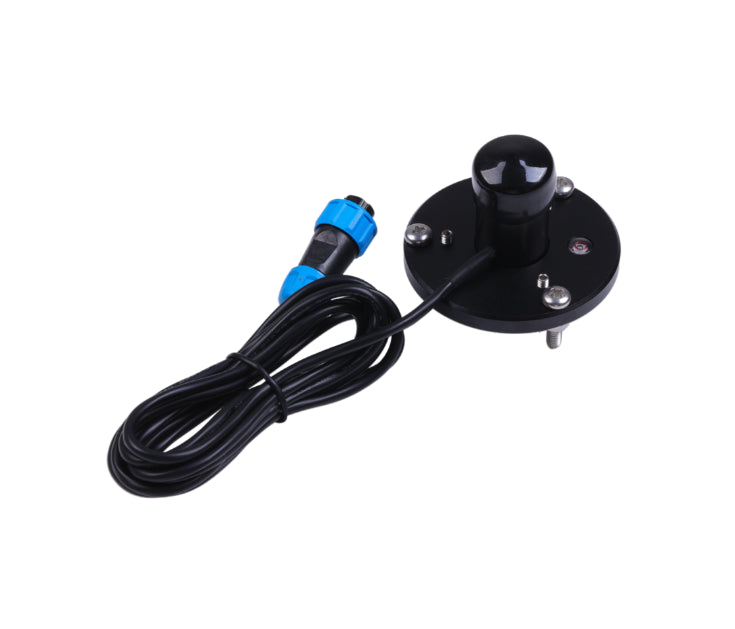
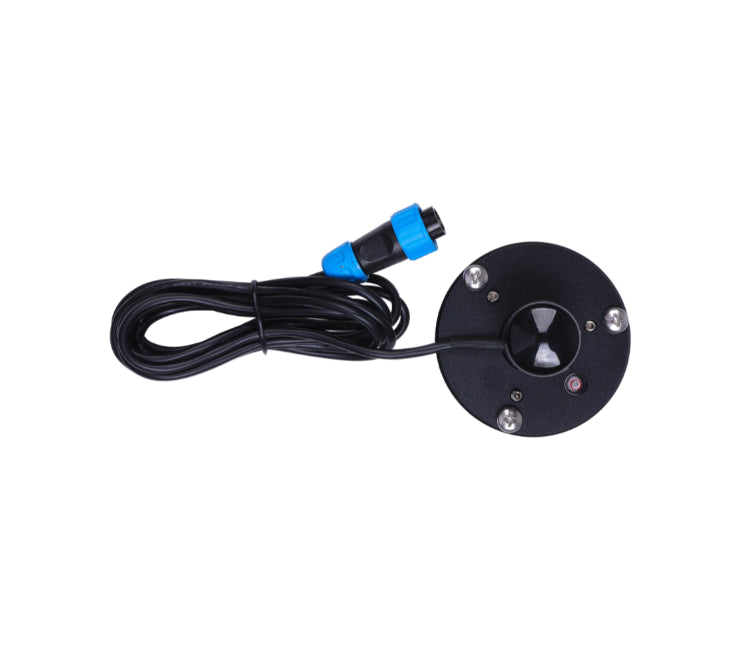
Industrial total solar radiation sensor MODBUS-RTU RS485 - S-ZFS-02
Specific project or quantity requirement?
For a multi-site deployment, a specific technical requirement or a volume order, please contact us for tailored advice or a customised offer.
CREATE YOUR ACCOUNT AND DISCOVER OUR SPARWAN ADVANTAGES

Dedicated Sales Representative
Sourcing and Consulting

Partner Rates
and volume discounts

Payment Terms
suited for pros
Industrial total solar radiation sensor MODBUS-RTU RS485 - S-ZFS-02
Accurate data regardless of lighting conditions.
The RS485 total solar radiation sensor is a reliable device that uses a quality silicon photodetector and optical filters to accurately measure solar radiation intensity. It consistently provides a current signal proportional to the radiation strength, ensuring accurate data regardless of lighting conditions.
Features
Easy to use
compact size, simple installation, quick integration
High performance
accuracy of ±3%, fast response, exceptional stability (<2% variation in one year), in the range of 0 to 2000 W/m².
Strong robustness
It is waterproof and dustproof with an IP6 8 housing and can operate in a wide temperature range of -30°C to 75°C.
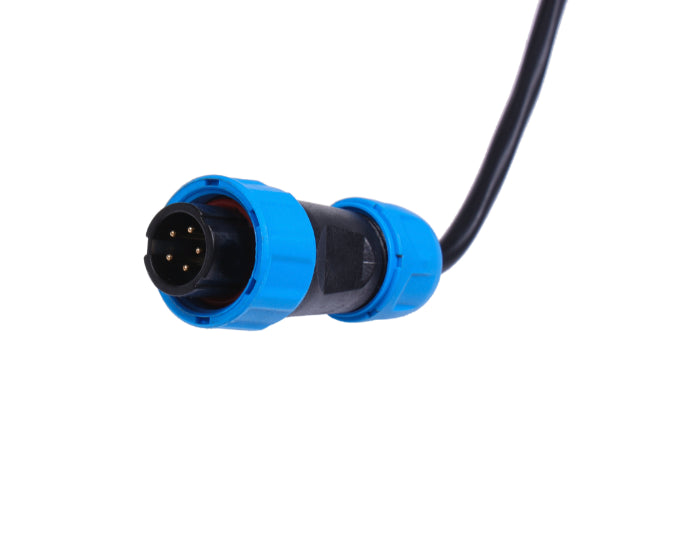
Universal MODBUS RS485 protocol
can be easily connected to MODBUS-RTU RS485 data loggers.
Wide range power supply
can be powered with a supply voltage between 5 and 24 V DC.
Adapted to difficult outdoor conditions
The industrial-grade total solar radiation sensor monitors solar radiation from 300 to 1,100 nanometers. Generates a current signal proportional to the intensity of incident radiation when exposed to light radiation, with sensitivity directly proportional to the cosine of the angle of incidence. The range is 0 to 2000 W/m². Supports MODBUS-RTU RS485 protocol, connecting to RS485 data logger for tailor-made monitoring.
Rated IP68, this rugged total solar radiation sensor operates from -30°C to 75°C, thriving in harsh outdoor conditions. It guarantees precise measurements of solar radiation, thus optimizing agricultural management to improve crop yield and quality. It also helps researchers make better use of solar energy by improving their understanding of radiation.
Application

Weather monitoring : measures solar, terrestrial and atmospheric radiation, facilitating weather forecasting and research.
Agricultural Study : Explores agricultural meteorology, crop growth and ecology.
Environmental Monitoring : Tracks radiation levels to assess environmental impact.
Energy Research : Supports solar and other energy studies by analyzing radiation conditions.
Measuring total solar radiation is crucial in many fields, providing essential data for weather forecasting, climate study, solar energy use, agriculture and environmental research. This has a direct impact on climate trends, the efficiency of solar panels, crop growth and the feasibility of energy projects.
For example, in agriculture, plants respond only to solar radiation, making precise measurements invaluable for optimizing irrigation, fertilization and planting strategies based on photosynthesis and lighting needs.